


The Velor Board
The Velor Board
Enhance Mobility & Flexibility with 10 Minutes a Day
Prevent Injuries Before they Happen
Build Stronger Joints. Move Freely. Live Pain-Free.
Couldn't load pickup availability

Get it between - and -.
-

Bought this because I had stiff lower body. After only 1 month my legs, feet, hips, knees feel so much better. 10/10 recommend
-

After seeing my mobility decline at 44, I bought a velor board. If you aren't stretching your calves every day your feet and ankles will pay the price


What is the science behind the Velor Board?
What is the science behind the Velor Board?
Improved Knee Strengthening
The incline shifts your weight into the quads and VMO — the muscles that stabilize your kneecap and protect the joint from grinding and clicking. Research found that incline angles of 15° or higher increase activation of these knee-protecting muscles by 40% compared to flat ground.
Significant Knee Pain Reduction
Participants who exercised on a 25° decline board experienced a 62% drop in pain scores over 12 weeks. The group doing the same exercises on flat ground showed almost no improvement.
Longer-Lasting Results Than Cortisone Injections
A randomized trial compared cortisone injections to incline-based exercise for knee tendon pain. Both improved at 12 weeks, but only the exercise group maintained their results at 6 months — the cortisone group's improvements deteriorated.
Full Lower Body Muscle Activation
EMG testing showed that decline board exercises activate four major muscle groups simultaneously — quads, hamstrings, calves, and tibialis anterior. One position trains the entire lower body chain instead of isolating a single muscle.
Better Knee and Hip Alignment
Inward knee collapse during movement is a primary risk factor for knee injuries and joint wear. Research found that squatting on a 25° decline board significantly reduced this collapse and improved trunk alignment — regardless of existing hip pain.
Lower Back Pain Relief
Tight calves restrict ankle movement, forcing the pelvis to tilt forward and putting constant stress on the lower spine. A 2024 study found that stretching on an inclined board for just 4 weeks significantly reduced low back pain and disability scores.
Increased Tendon Repair and Strengthening
Tendons need controlled loading to heal — too little and they weaken, too much and they tear. Research found that a 25° incline provides the exact increased loading that drives tendon thickening and repair, which is why PTs prescribe it for Achilles and patellar tendonitis.
Superior Long-Term Results vs. Standard Exercise
A 12-month trial comparing decline board exercises to standard step exercises found that the decline board group showed significantly greater clinical gains. The researchers concluded the decline protocol is superior for people who want to stay active while rehabilitating.
Selective Muscle Strengthening That Reduces Knee Stress
The incline shifts the line of gravity so the knee-supporting muscles absorb more load while the knee joint itself absorbs less. This is why decline boards reduce knee pain — you're strengthening the support system while protecting the thing it supports.
What is the weight limit?
What is the weight limit?
Dimensions & Design
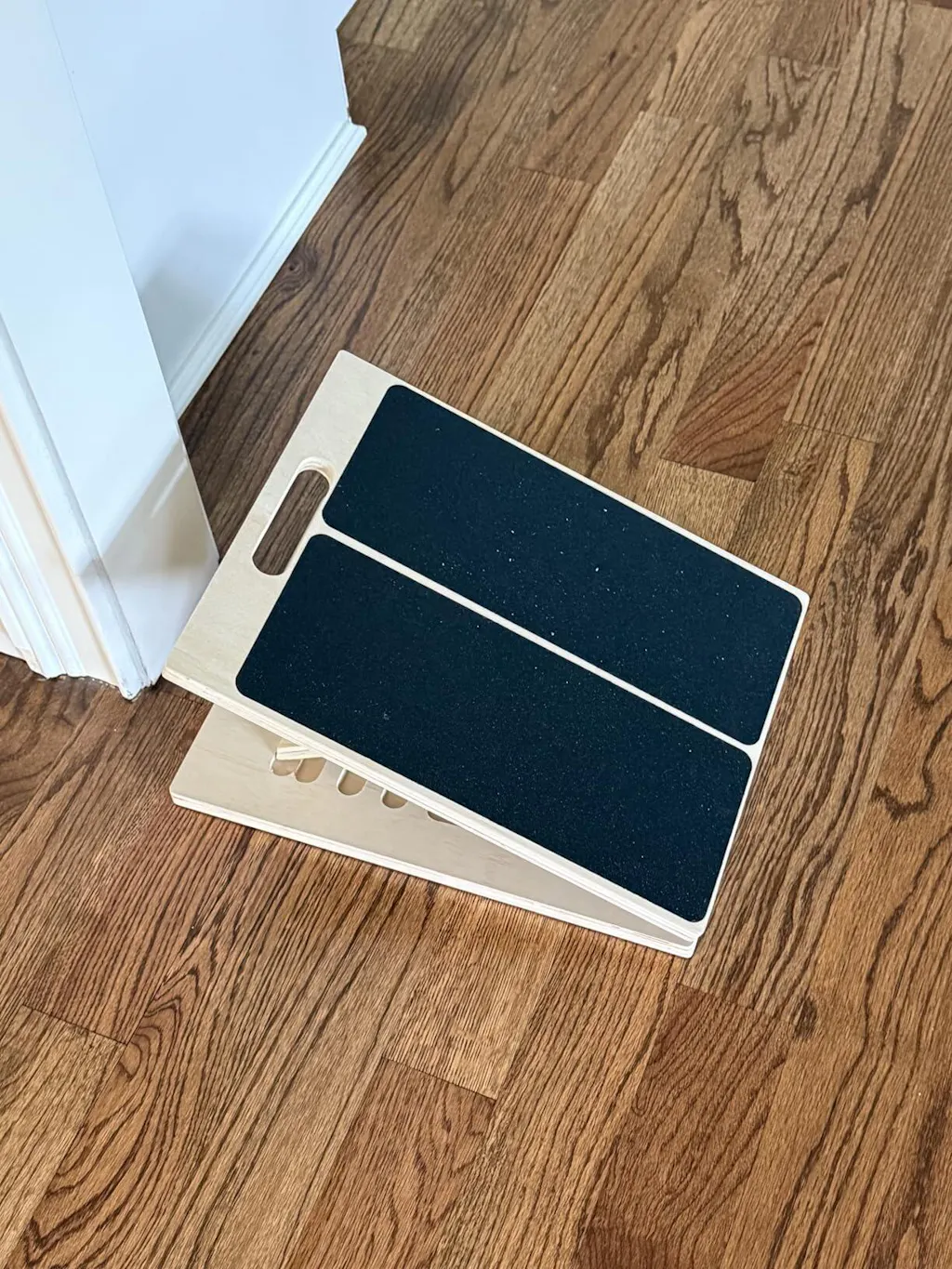
Size: Stable foot placement, compact enough for easy storage. Folds flat.
Weight: Approximately 5 lbs depending on model.
Angles: 5 adjustable incline levels (25°–45°) for progressive stretching and strengthening.
Materials & Durability
Material: Premium-grade wood or heavy-duty composite (depending on version). The Velor Board can support up to 250 lbs. The Velor Board 2.0 model can support up to 300 lbs.
Surface: Anti-slip grip tape ensures secure footing during exercises.
Construction: Foldable or flat-pack design for portability and space-saving.
Important Use Information
Not a medical device
Use at your own risk
Consult a doctor if injured
Follow instructions
*The Velor Board is designed as a general fitness and mobility tool intended to support movement, flexibility, and strength. It is not a medical device and is not intended to diagnose, treat, cure, or prevent any disease or medical condition.
Shipping Info
Shipping Info
We ship all orders from our warehouses in Michigan & California, USA.
We offer Free Shipping on all of our (orders above $87), with a few exceptions such as Hawaii, Alaska & military bases. We ship using FedEx, UPS, or USPS (and sometimes a few other partner carriers).
See the average delivery times below:
US: 2-8 business days
Worldwide: 7-14 business days
Failed or Missing Delivery:
If the package cannot be delivered to the given shipping address due to the absent cooperation of the customer, we will try to deliver it the next business day. After 3 delivery attempts the order will be returned to us.
Tracking & Estimates:
You'll receive tracking when your order ships out, usually within 1-3 days after the order is placed (unless it is a pre-order). Shipping times listed are estimates, and can not be guaranteed as delays can happen, although rare.
Loved by 100,000+ Users


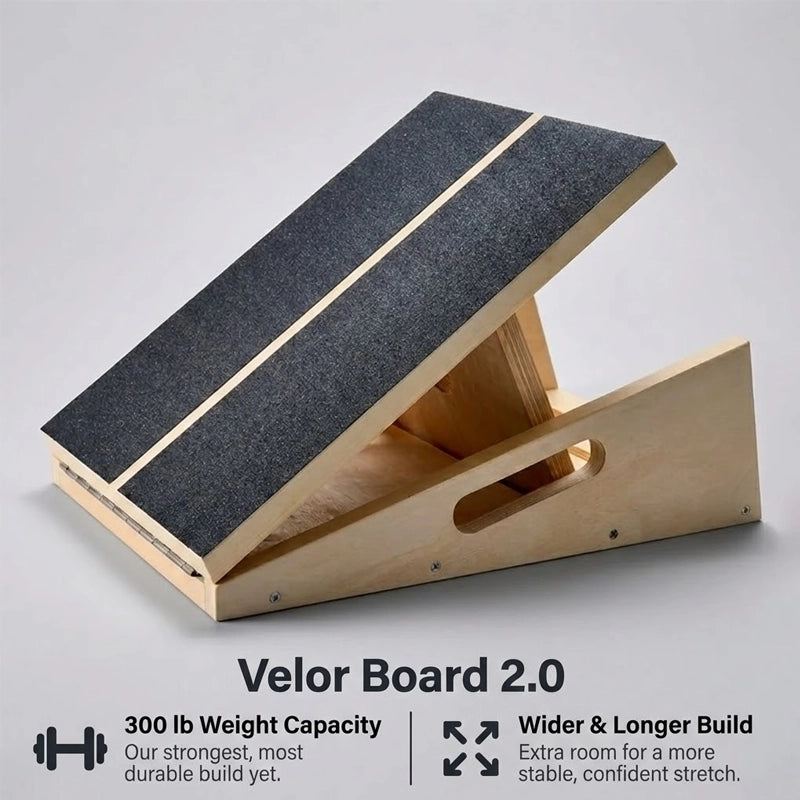
Improve Your Knees, Feet, Ankles, and Hips

Noticeable Results in 30 Days
- Joints begin to ache less
- Calves and Achilles start releasing tension
- Daily movements feel more controlled
- Knees bend and move with less discomfort
- Flexibility improves in ankles and lower legs
- Walking, stairs, and standing feel smoother
- Joint aches and stiffness dramatically reduced
- Lower body feels stronger and more stable
- Enhanced movement in your activities
Why the Velor Board?

Why the Incline Matters
The Velor Board’s incline design targets the hard-to-reach areas that are key for reducing stiffness, aches, improving mobility, and preventing injuries.
Target KEY Areas that Prevent Injuries

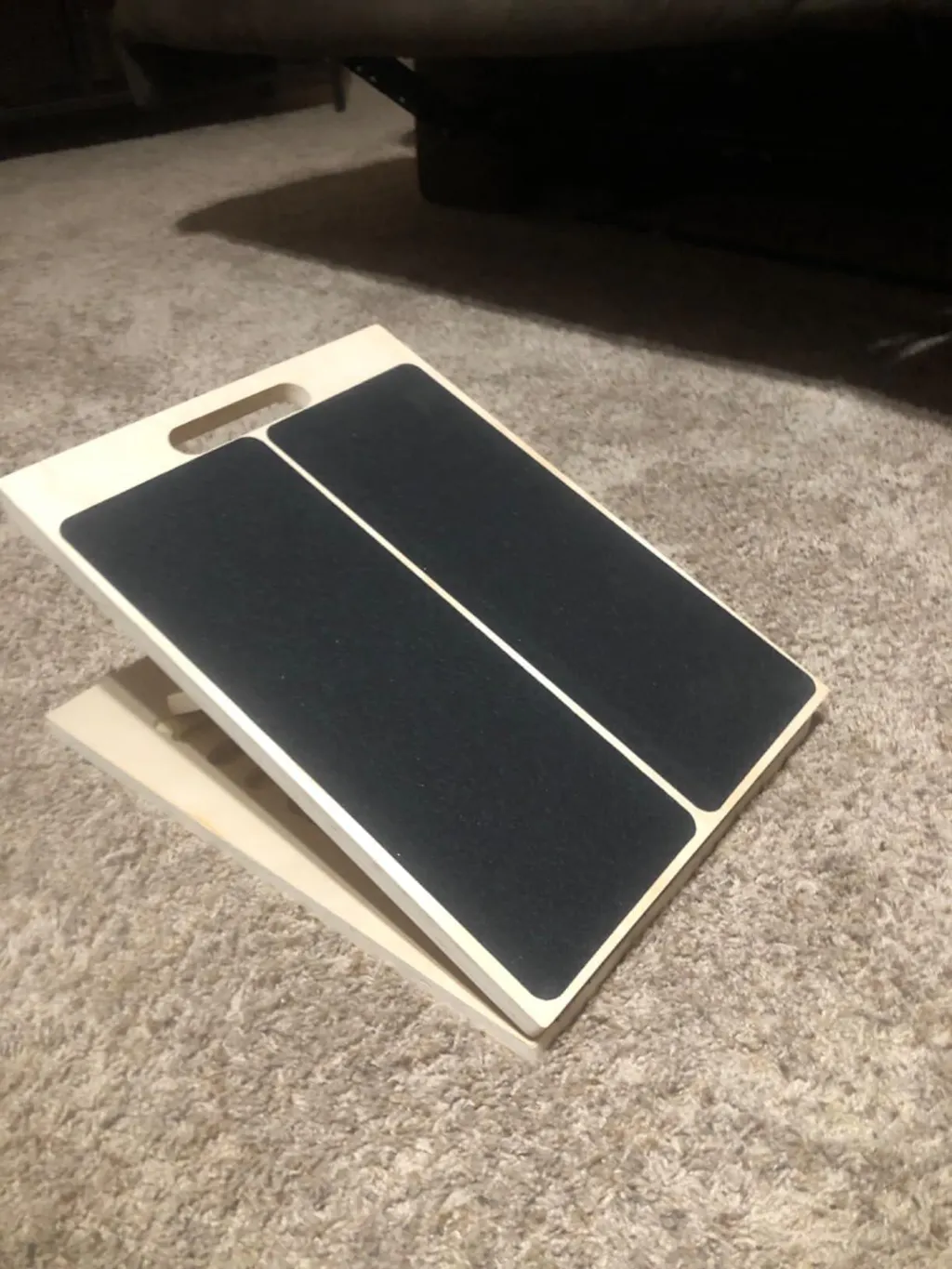
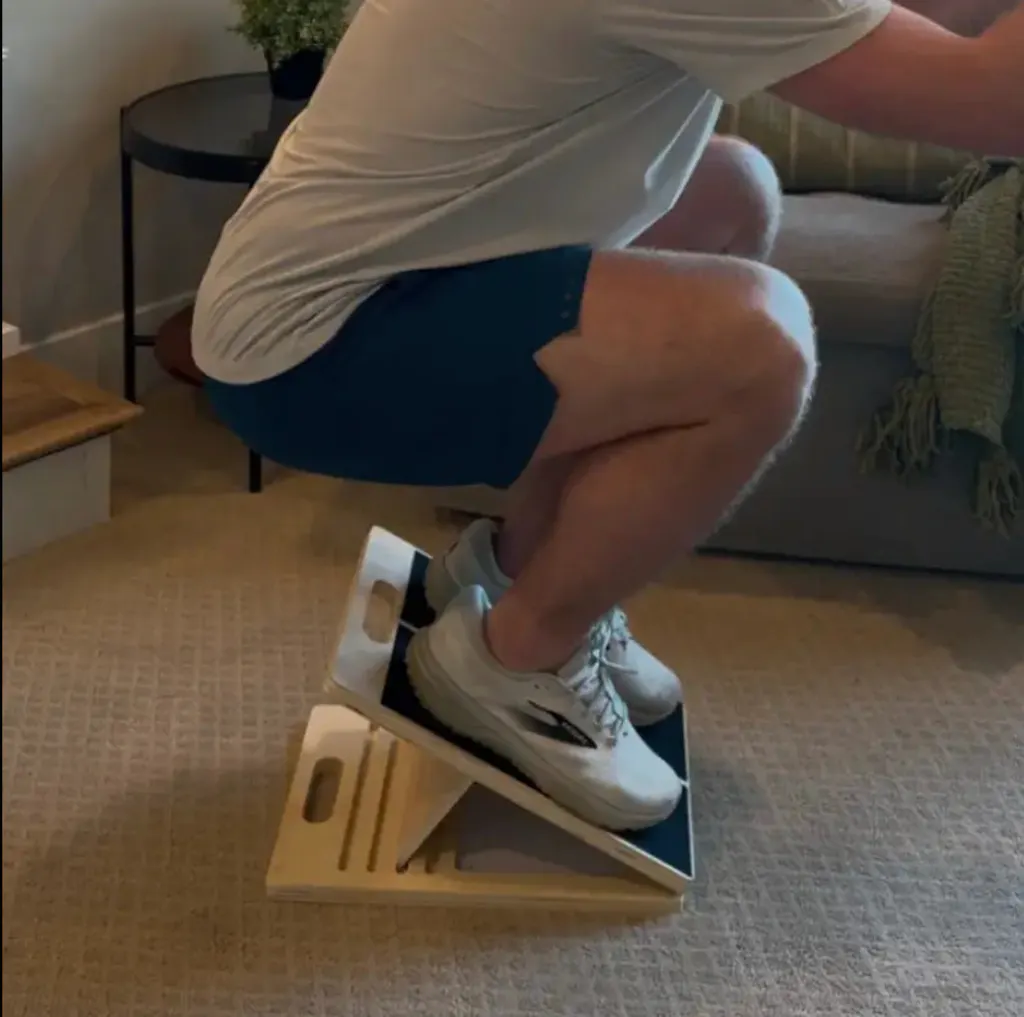
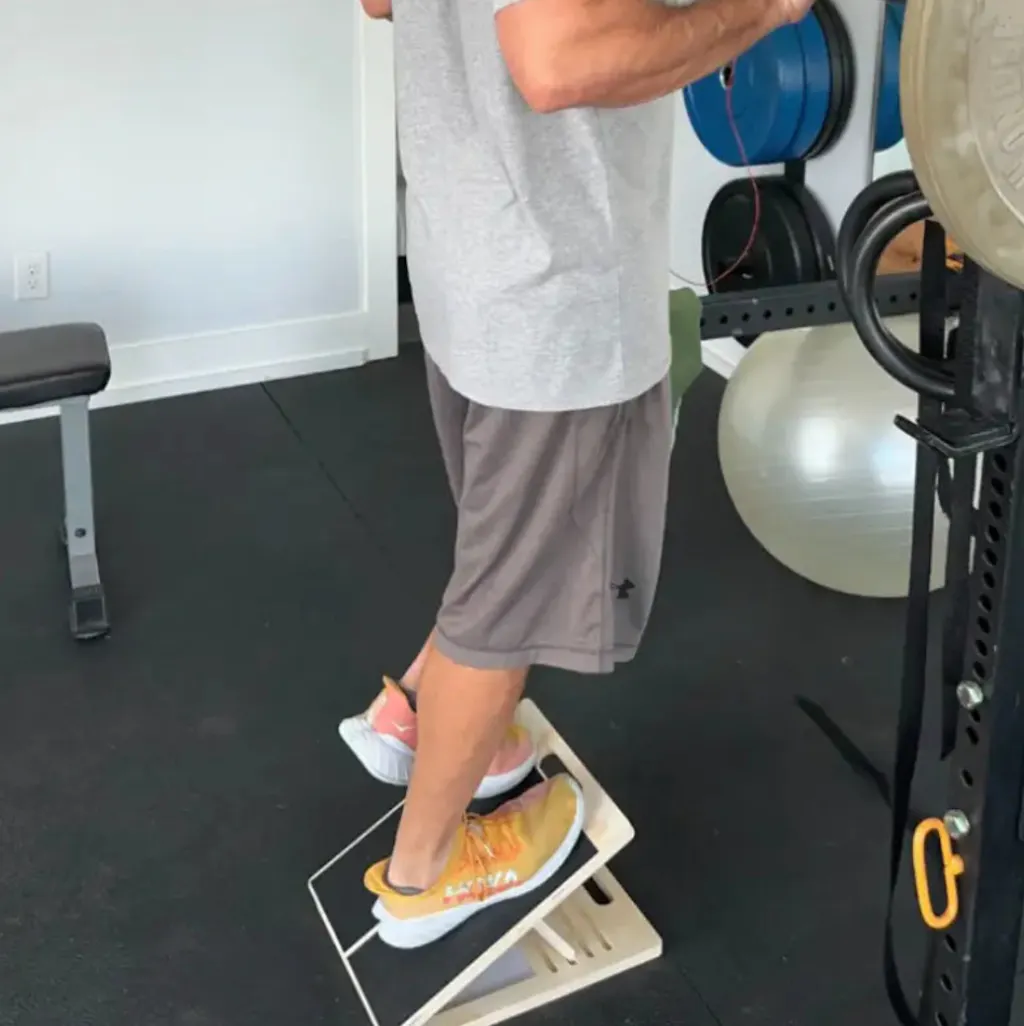
Frequently Asked Questions
Is this medically approved or safe for injuries?
Is this medically approved or safe for injuries?
The Velor Board is not a medical device and is not intended to diagnose, treat, or cure any condition. It’s designed as a general fitness and mobility tool to help improve flexibility, strength, and movement.
Many people use it to support joint health and reduce stiffness, but if you have an existing injury, recent surgery, or chronic condition, we recommend speaking with your doctor or physical therapist before using it.
When used correctly and progressed gradually, it can be a safe and effective way to build strength and mobility—but it’s important to stay within a pain-free range and follow proper form.
Should knees go over your toes?
Should knees go over your toes?
Recent research and physical therapy practices show that allowing the knees to move slightly over the toes is actually natural and often necessary for healthy knee movement.
Your knees go past your toes during many everyday activities like walking downhill, climbing stairs, or getting up from a chair. The key is doing it in a controlled way that gradually strengthens the muscles and tendons around the knee.
The Velor Board helps with this by creating a safe, controlled incline that gently loads the knees, ankles, and calves. This helps strengthen the quadriceps, patellar tendon, and surrounding support muscles, which are important for knee stability and long-term joint health.
If you’re new to it, you can always start with smaller movements or partial squats and gradually increase your range as your knees get stronger.
Can beginners safely use the Velor Board?
Can beginners safely use the Velor Board?
Absolutely! The Velor Board is designed with adjustable angles, making it suitable and safe for beginners, seniors, and those with limited mobility to easily start gentle, effective stretching.
Who should use a Velor Board?
Who should use a Velor Board?
Our Velor Board is ideal for anyone looking to improve flexibility, relieve joint stiffness, and enhance mobility—especially adults over 50, athletes, or those recovering from injury or surgery.